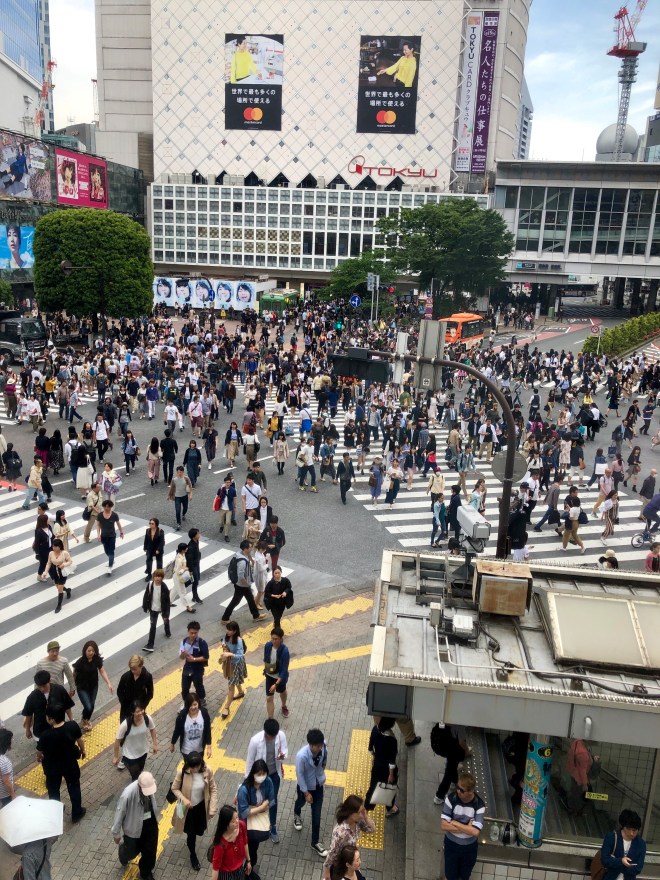
The cities of Japan are an insane assault on the senses. Every available space is used to its full potential. It’s a place where anything goes, and its’ mantra seems to follow the saying “the rules are; there are no rules”. But dig underneath the top layer of craziness, and you’ll find a place of wonder that is so far removed from anything back home. Toto, you’re not in Kansas anymore.
While 5 days in Tokyo was enough to tick off the main items from my list, it is easy to see how you can go wandering down a rabbit hole and never want to leave. The people are friendly and helpful, the public transport system surprisingly easy to navigate (it does help if you have a portable wi-fi modem, usually called pocket wi-fi!) and there are new things to see around every corner. The list below covers off a few of my favourite places to eat, things to see and must-do activities but it is by no means a complete guide to Tokyo. I’m not sure even a local could pull that off!
TOKYO TIDBITS
Coffee haunts:
- Essence Cafe, Ebisu
- Mr Farmer, Harajuku
- Sarutahiko Coffee, Ebisu
- Saturdays NYC, Daikanyama
- About Life Coffee, Shibuya
- Why Juice?, Daikanyama & Shibuya
Japan Tips & Tricks:
- Make sure your hotel / Airbnb has pocket wi-fi, it was a lifesaver when navigating the streets. It’s basically a portable wi-fi modem and most hotels or Airbnb’s should come with one.
- Apple Maps is brilliant. You can enter a location, click the ‘public transport’ option and it will tell you exactly which platform to get to, what direction to head, etc.
- Buy a Suica card before you go. A Suica card will let you catch most trains (excluding Shinkansen) in multiple cities (including Tokyo AND Kyoto). Your local travel agent should be able to organise a Suica card along with your JR Rail Pass.
- Modesty is key ladies. By Australian standards, I’m pretty modest. But in Japan, I felt like I was showing way too much skin. Think tights always, midi skirts and jackets even in warm temperatures.
ARRIVING IN TOKYO
If you’re flying direct to Tokyo, you’ll most likely arrive at the main airport, Narita International Airport. You’re actually still about an hour away from the city, so one of the best pre-travel items to organise is a JR pass and/or Suica card. As we only had a 7 day JR pass, we used the Suica card to catch the train from Narita to our accommodation. Don’t stress if you miss your train either, another one will come within 5 minutes.
One thing becomes immediately clear as you navigate the streets of Tokyo – all available space is used. Apartments basically sit on top of each other, cafes and restaurants have around 10 seats on average, usually with a line of waiting customers out the door. So be warned, accommodation is on the smaller side. But this is not really an issue as this is simply a place to rest, there is too much to see and do to be inside all day.
If you want to avoid the crowds, I recommend staying in Ebisu. It was busy, but didn’t have the hectic vibe of places like Harajuku, Shinjuku or Akihabara and a good place to set up base.
Like most countries (apart from Australia), Tokyo people are late risers. Don’t expect to see places open until 10am at the earliest (most boutique shops didn’t open until 11am, and some even later). Some cafes are open earlier for commuters and a local favourite was Essence cafe. This is a quaint coffee shop doubling as a florist and bar at night and does a mean ‘1 shot morning buffet’ for ¥500. We found out the hard way that ‘1 shot’ means you are allowed to visit the buffet once, there are no coming back for seconds.

1-Shot Buffet breakfast from Essence Cafe, Ebisu.
EXPLORING TOKYO
The next suburb across from Ebisu is Daikanyama, and was by far my favourite suburb we visited. We spent half a day exploring the eccentric boutique shops that line the streets of Daikanyama, but could easily spend more. If the line isn’t too long, definitely stop for some of the fluffiest stuffed pancakes you’ll see at Flippers. And be sure to check out Stalogy next door – it’s a stationary lover’s dream!
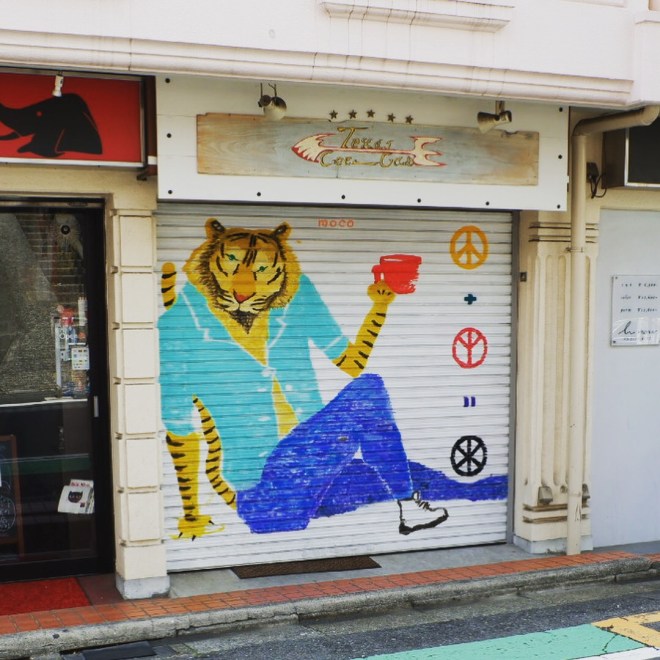
Exploring the eccentric streets of Daikanyama.
When you’re ready to face the hustle and bustle of the city, catch the train to Harajuku. A shopping strip made famous by Japan’s street fashion and Gwen Stefani, the best time to glimpse the Harajuku fashion scene is on a Sunday. We managed to stumble across a number of impromptu fashion shoots and an Instagram fashion competition – all within the hour we cruised the streets! And while the main street is where you’ll see the craziest outfits, make sure you wander down a side street or two. Pick up a crepe (almost as good as a donut) from one of the many creperie trucks to pump up the blood sugar levels and check out the vintage clothes and accessories at RagTag. The vintage Chanel collection is amazing (downside: I discovered vintage Chanel is barely cheaper than new Chanel).
Take a much needed break, head back up to Harajuku station and cross the road to find yourself within the sanctuary of Yoyogi Park. Once there, make your way to Meiji Shrine or ditch the crowds to discover the hidden sanctuary at the Meiji Jingu Inner Garden (well worth the ¥200 entrance fee).
If you’re after some homemade, traditional noodles that has warranted a Michelin star, definitely take the time to find Tamawarai. The prices are extremely reasonable for a Michelin star restaurant (think around ¥1,645 for soba). The outside of the restaurant looks like any other house along the street, but ring the bell and a waiter will soon attend to your needs. You may need to wait but it won’t be for long and there is a quaint little waiting room just outside.
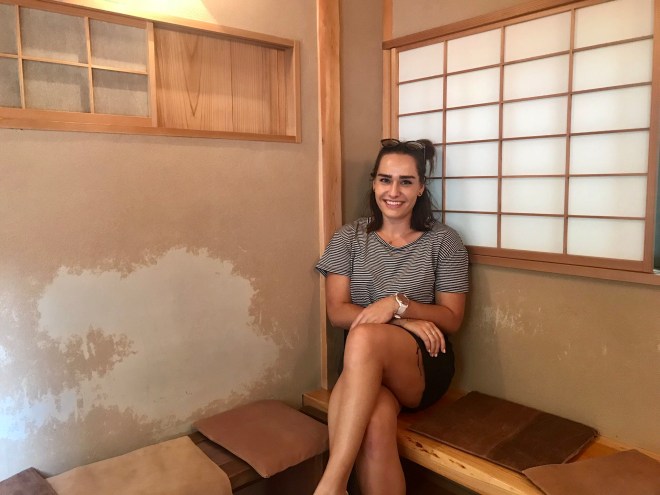
The waiting room of Tamawarai – only had to wait 15min before being shown to our table.
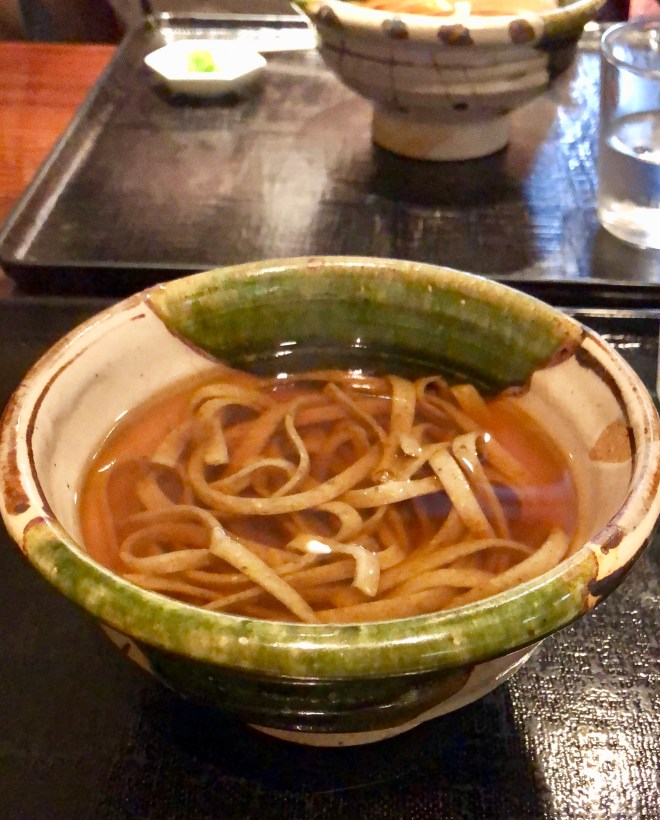
Homemade buckwheat Soba noodles in broth.
If you can stand to be on your feet a bit longer, head back towards Ebisu and take the edge off at Bar Trench. The immaculately-dressed (even by Tokyo standards!) waiters will make a cocktail of your choosing to divine perfection under the dim lights and drum kit on the second floor.
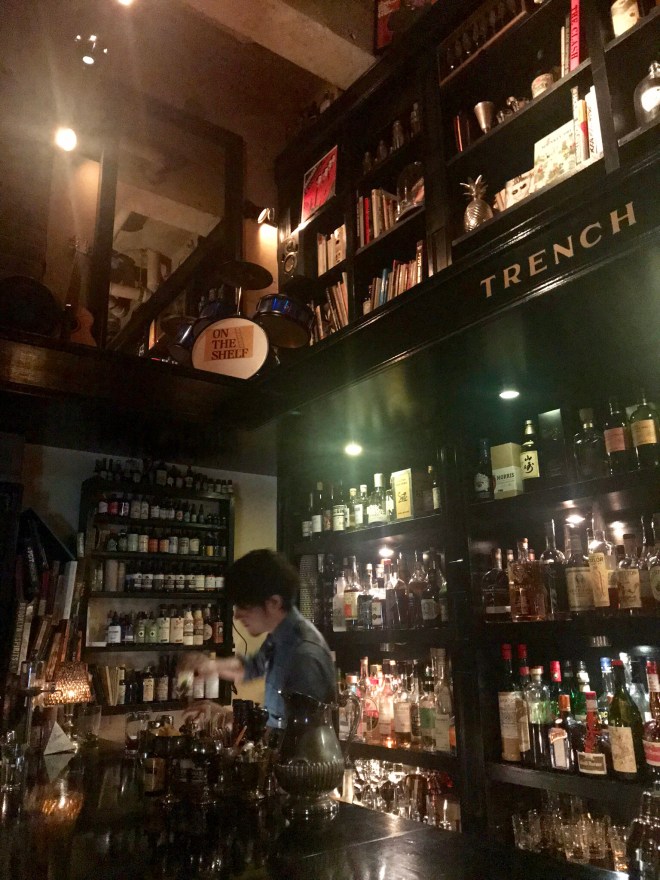
Inside Bar Trench.
Walking on the well-beaten path, it is hard to pass up visiting the main Tokyo city sites like Shibuya Crossing and Akihabara (‘Electric City’). Brave the 6-way pedestrian crossing and grab a Matcha latte from Starbucks before squeezing into whatever window space is available to watch the masses at Shibuya Crossing. Akihabara is a Tech / Anime lovers’ dream. Whilst it wasn’t for me, I did enjoy exploring the 8-storey chemist and discovering the world of Japanese beauty gadgets.
If you’re after a night out, start with some yakitori in Piss Alley (named for its early days when it was a dodgy destination for low-lifes to get a drink or ten, and then relieve themselves wherever they could) – but be prepared to wait, each restaurant only seats around 4 people. Once you’ve had your fill take the short walk to the Golden Gai, a laneway network of teeny bars. Don’t be perturbed if you get refused entry – a number of the bars are reserved for regular members and locals only. If there’s an English menu visible, chances are the bar accepts tourists. While you’re here, make sure you order a Shochu. Shochu is a distilled alcohol from a mixture of starches (rice, sweet potato, etc.) and is between wine and vodka in strength. It has a mild flavour and my preference is to have it on ice or with soda and a hint of lime. You won’t regret it!

Piss Alley during daylight hours
If there’s one thing you must do in Tokyo, it’s drive around the city in go karts dressed up like Mario or Luigi. It’s insane to say the least and I totally thought I was going to die (at least for the first 10 minutes). But push through that, because it’s totally worth it. A fantastic way to see the city sights (we drove through Shibuya Crossing at least 5 times!), it is definitely something to tick off your bucket list. The other drivers on the road are polite and surprisingly used to go karts whizzing about the place. There’s also no need to worry about photos, your guide will take 100+ en route and airdrop them straight to your phone afterwards! It’s an experience you won’t forget – just maybe don’t tell your mum.
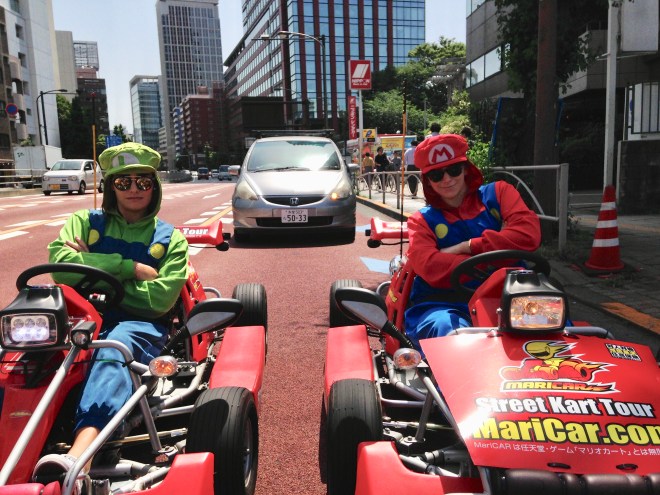
Mario & Luigi hit the city streets of Tokyo.
Coming up next: Finding the zen in Kyoto

 the avid wayfarer