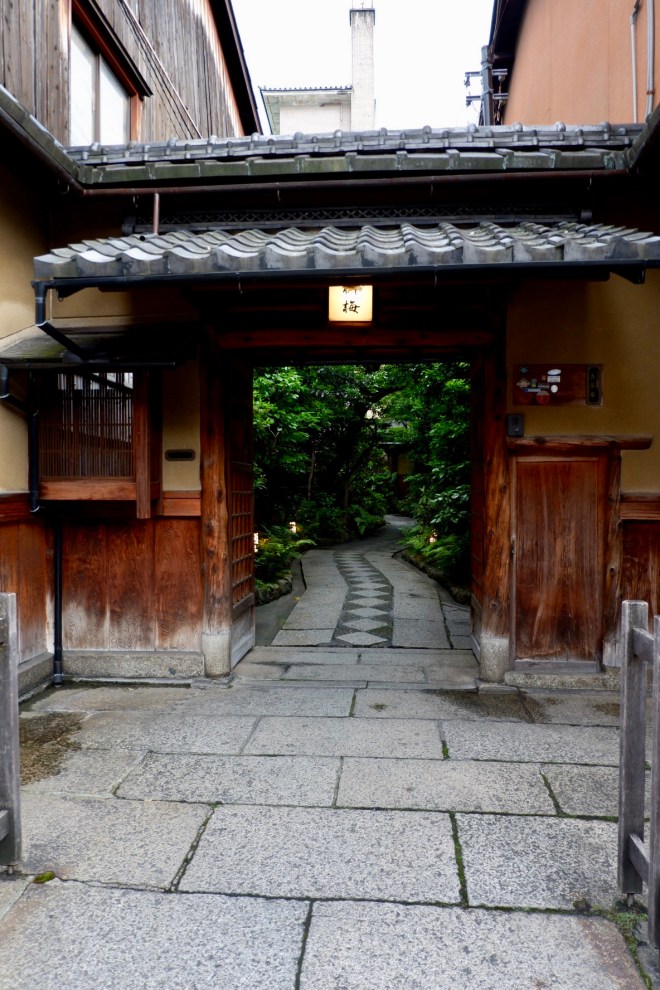
The little sister of Tokyo, Kyoto is a staple when sampling all that Japan has to offer. It epitomises the true clash of tradition and technology. You can immerse yourself in the bright lights of Higashiyama or travel back through time down the side streets.
KYOTO TIDBITS
Coffee haunts:
- % Arabica, Higashiyama & Arashiyama
- Len Hostel, Kawaramachi
- Drip Drop Coffee Supply, Kyoto City
Japan Tips & Tricks:
- Make sure your hotel / Airbnb has pocket wi-fi, it was a lifesaver when navigating the streets.
- Apple Maps is brilliant. You can enter a location, click the ‘public transport’ option and it will tell you exactly which platform to get to, what direction to head, etc.
- Buy a Suica card before you go. It will let you catch most trains (excluding Shinkansen) in multiple cities (including Tokyo AND Kyoto). Your local travel agent should be able to organise a Suica card along with your JR Rail Pass.
- Modesty is key ladies. By Australian standards, I’m pretty modest. But in Japan, I felt like I was showing way too much skin. Think tights always, midi skirts and jackets even in warm temperatures
GETTING TO KYOTO
If travelling from Tokyo, grab a ticket on the Shinkansen (bullet train) to Kyoto. It’s a great way to see the countryside of Japan and if it’s a clear day you might even spot Mt Fuji! If you have a JR Pass you can travel on the Hikari Line to Kyoto, however you still need to book a seat. It takes just over 2 hours to get to Kyoto, and once at the main station you may need to catch a local train out to where you are staying.
EXPLORING KYOTO
One thing I learnt from my time in Kyoto is to never underestimate the value of a Japanese hostel. Now I thought my backpacking days were well behind me, but one look inside Len Hostel and I was hooked. It is unlike any other backpackers I have stayed at during my travels (and there have been some doozy’s) – the private room was huge with its own sink. The bathrooms were shared, but honestly the cleanest shared bathrooms I’ve seen. And the best part? It wasn’t just guests that came into the cafe / bar at the entrance – even locals were a fan of this place!
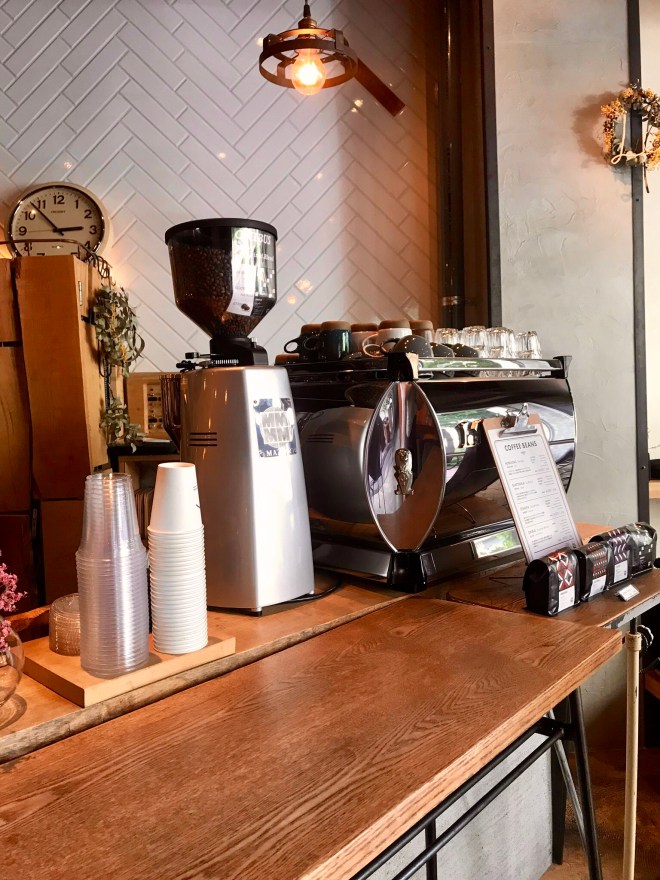
The cafe located in the Len Hostel.
Wander down (or catch a train to Kawaramachi or Gion-shijo station) to the main Gion strip. Be prepared (and treat yourself!) for a Matcha overload. Just about every second shop is selling some sort of green tinged item. Once you’ve had your fill, either head straight down the street to the Yasaka Shrine or wander the old town. These tiny little streets are full of traditional style merchant houses that exude peaceful living. Keep your eyes out while meandering as you may spot a Geisha hurrying from one house to another (generally followed en masse by cameras with tourists hanging off them).

Traditional style house in the old town district.
One thing Kyoto is not short of are shrines. There are literally hundreds of shrines scattered in amongst the residential houses, so if shrines are your thing Kyoto is the place to be. Not into shrines? Don’t worry – there’s still plenty of things to see!
ALL FOR THE ‘GRAM
Kyoto plays host to some of the most Instagrammable places in Japan. Inevitably, this comes hand-in-hand with the crowds. My suggestion? Go early. The shops aren’t open, the partying tourists are still kicking their hangovers and there will be no one (almost) in the way of your shot. My favourites are listed below.
1. Arashiyama Bamboo Grove
My favourite place in Kyoto is by far the suburb / town of Arashiyama. This is home to the Insta-famous Arashiyama Bamboo Grove. Located at the end of the Hankyu Arashiyama Line (approx. 30min from Kyoto), this little town is bursting with the colour green. Whilst a little difficult to find, take the time to walk through the park and into the Bamboo Grove. If you want to beat the crowds here, I recommend arriving by 9:00am at the latest (I arrived at 7:00am and was not the first one there!).
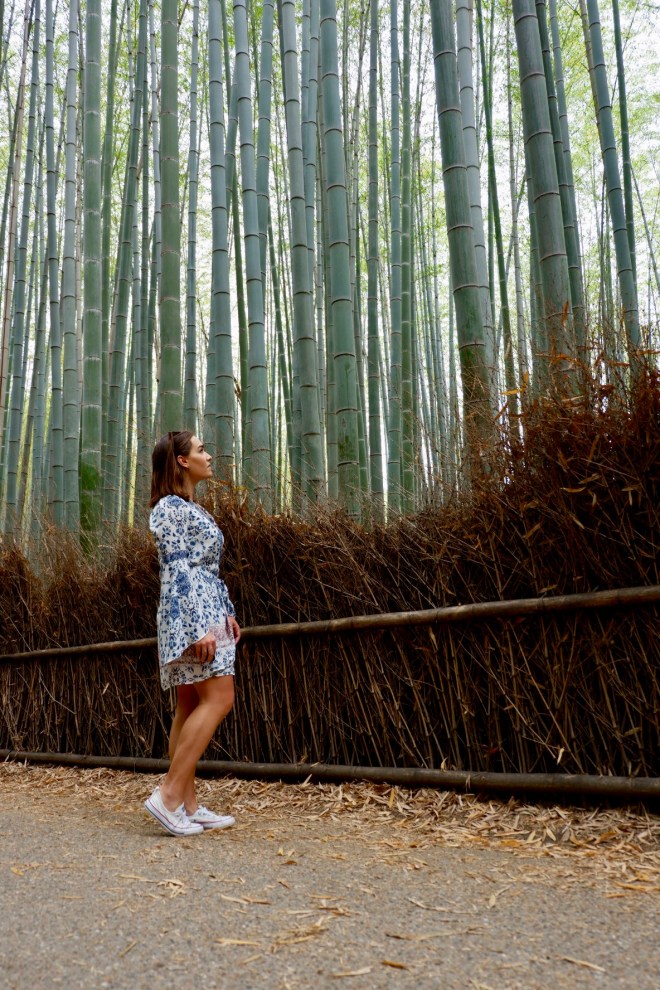
In amongst the Bamboo.
Had enough of staring at tall, straight sticks? Go back out the way you came to grab a coffee and prosciutto baguette from % Arabica along the river. Hands down the best coffee I had in Japan came from this place. So much so, that I sourced it out on multiple occasions back in Kyoto (did NOT mind one bit that I had to leg it 20min to get that Melbourne-style coffee).
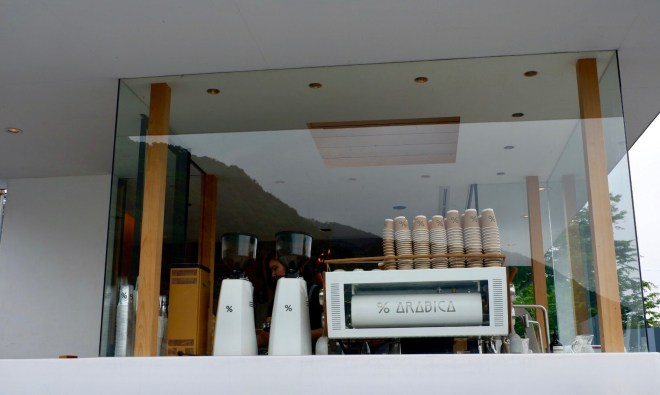
Minimalism at its best at % Arabica.
On your way back to the station, cross the river and head along the path on the opposite side to the Bamboo Grove to get your fill of greenery. Keep your eye out for turtles in the river!

Arashiyama has more than just Bamboo. Views from the river.
2. Fushimi Inari Shrine
…or better known as the Orange Gates. Catch the Keihan Line to Fushimi-Inari station and follow the crowds to the start of the gates. Again, it’s best to get here as early as you can to beat the masses – however, another trick is to keep walking. There are over 10,000 gates in the Shrine, and the deeper you go the less people there are. It is about a 45min walk to the summit of the shrine but I found it quite anti-climatic. The best thing to see in regards to the Fushimi Inari Shrine are, without doubt, the Gates.
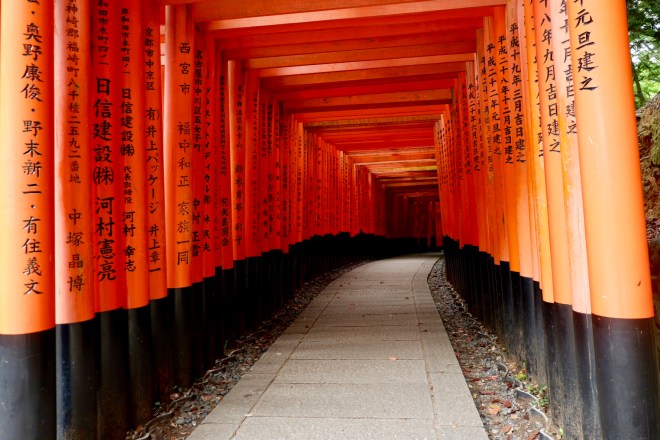
Heading up to the summit of Fushimi Inari.
3. Nijo castle
Nijo castle has always been on my list of places to visit since I was a child – mainly because of the Nightingale floors. However, 8-year old me was bitterly disappointed to find out that these floors within Nijo castle are just due to creaky nails, and not in fact invented to stop Ninja attacks.
Regardless, this castle is fascinating. There is an entrance fee of approx. ¥500 but to me it’s totally worth it. You must take your shoes off to enter the castle, and there are some restorations being done to the interior, but the information about the royal family over time and original structure is nothing like the royalty of the Western world. You aren’t allowed to take photos inside the castle which only adds to the enchantment.
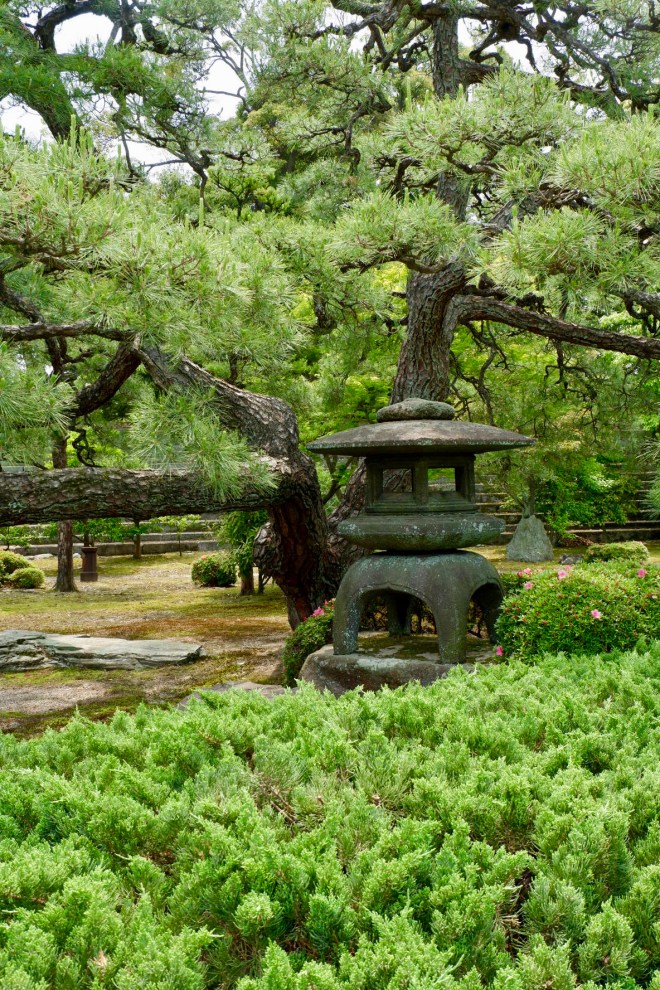
The grounds of Nijo Castle.
Coming up next: Becoming a snow bunny in Queenstown

 the avid wayfarer